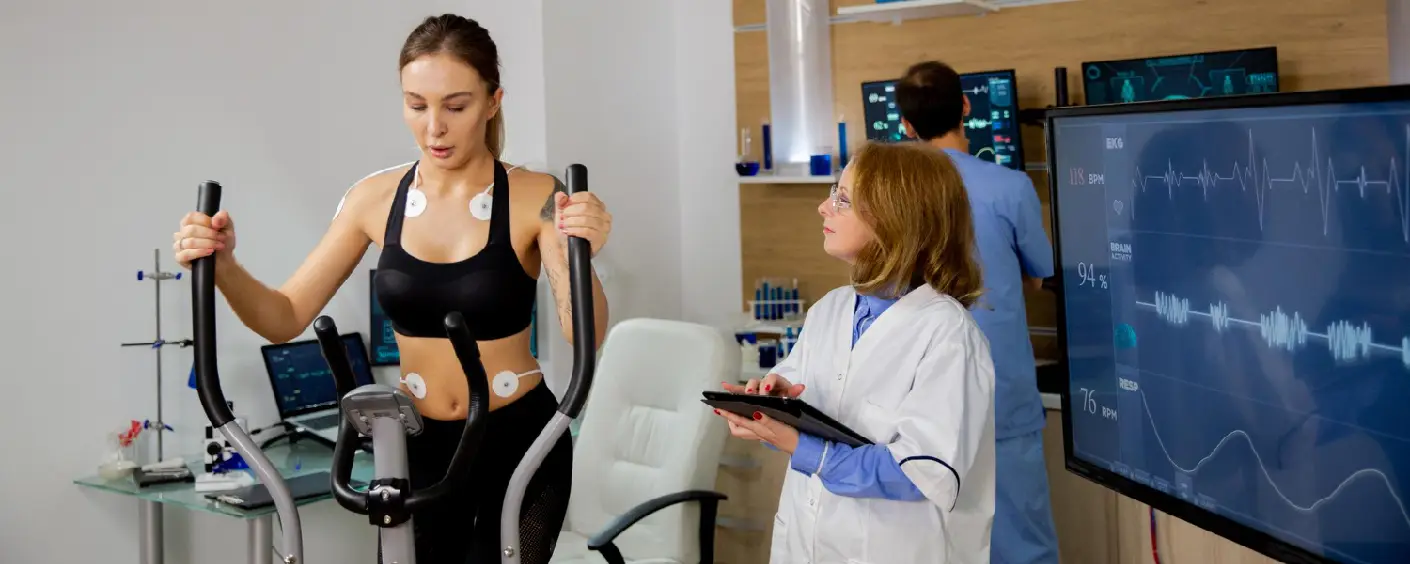
EMG Test: What to Expect During Nerve Testing
Disclaimer: This content is provided for educational purposes only and is not a substitute for professional medical advice. Consult a qualified healthcare provider.
An EMG test records electrical signals from muscles to diagnose nerve disorders.
It is often performed alongside a nerve conduction study (NCS) measuring signal speed through nerves. Together, both tests tell a neurologist whether numbness, weakness, or pain stems from nerve damage, muscle dysfunction, or both.
What Is an EMG Test?
EMG (electromyography) records the electrical signals skeletal muscles produce at rest and during contraction. The test detects abnormal muscle activity, including spontaneous firing that indicates nerve irritation or muscle disease.
A fine needle electrode (intramuscular EMG) or surface electrode (surface EMG) is placed on or into the muscle. The electrical signal is displayed on an oscilloscope or heard through a speaker; patients hear the characteristic crackling sound of muscle activity.
Most diagnostic referrals include both EMG and nerve conduction study (NCS) in a single appointment, together called electrodiagnostic testing. At Neurology Institute of Huntsville, EMG and NCS are conducted by board-certified neurologists with specialized training in electrodiagnostic medicine.
The American Association of Neuromuscular & Electrodiagnostic Medicine recommends a minimum six-month preceptorship with at least 200 performed electrodiagnostic tests before independent practice.
Meet board-certified neurologist and EMG specialist Dr. Jitesh Kar at Neurology Institute of Huntsville.
What Is the Difference Between an EMG and a Nerve Conduction Study?
EMG and NCS are distinct tests that answer different questions, though providers most often perform them together.
EMG measures the electrical activity generated by muscles, detecting muscle fiber dysfunction and neuromuscular junction disorders.
NCS measures the speed and strength of electrical signals traveling through a nerve, detecting demyelination (slower conduction velocity) and axon loss (reduced signal amplitude).
NCS identifies the nerve problem; EMG evaluates the muscle response. A neurologist needs both to distinguish among neuropathy, myopathy, and neuromuscular junction disorders. For carpal tunnel syndrome, NCS shows a slower conduction velocity across the wrist. For myasthenia gravis, EMG shows progressively weaker muscle signals with repeated stimulation.
Normal nerve conduction velocity in the arm ranges from 40 to 60 meters per second. After peripheral nerve injury, axons regenerate at approximately 1 mm per day.
| Feature | EMG | NCS |
| What it measures | Electrical activity of muscles | Speed and strength of nerve signals |
| What it detects | Muscle dysfunction, neuromuscular junction disorders | Demyelination, axon loss, nerve compression |
| How it feels | Mild discomfort from fine needle insertion | Brief electrical pulse sensation |
| Typical diagnoses | Myasthenia gravis, myopathy | Carpal tunnel, peripheral neuropathy, CIDP |
Learn how EMG and NCS testing helps identify peripheral neuropathy at Neurology Institute of Huntsville.
What Happens During an EMG Test?
Before the Appointment
Wear loose, comfortable clothing that allows access to the limbs being tested: shorts for leg testing, short sleeves for arm testing. Avoid lotions on the skin, which can interfere with electrode adhesion.
Bring an insurance card, photo ID, and a list of current medications. Most medications should be taken as usual. Verify insurance coverage before the appointment.
During the Test
The patient is seated with the limb resting comfortably. The neurologist explains each step before proceeding.
Surface electrodes (if used): Small sticky patches placed on the skin. Essentially painless.
Needle electrode (intramuscular EMG): A very thin, sterile needle is inserted into the muscle. Patients may feel a brief pinch or mild cramp lasting one to three seconds. Each muscle is tested separately.
NCS component: Small electrical pulses are delivered along the nerve pathway. The voltage is very low, and there are no known long-term side effects. The patient hears the electrical activity through a speaker as a rhythmic popping sound for normal muscle.
Dr. Jitesh Kar performs EMG and NCS with a focus on patient comfort and clear communication throughout the procedure.
After the Test
Slight soreness at needle insertion sites typically resolves within 24 hours. No activity restrictions are needed. We may discuss preliminary results the same day, with a formal written report sent within three to seven business days.
Based on findings, your neurologist may recommend no further action, follow-up imaging, therapy referral, or further diagnostic workup.
Explore neuropathy diagnosis and treatment options at Neurology Institute of Huntsville.
Does an EMG Test Hurt?
An EMG test causes mild, transient discomfort, not sharp or lasting pain. Most patients describe the experience as uncomfortable rather than painful.
- Surface electrodes: Sensation similar to removing an adhesive bandage. Essentially painless.
- Needle electrode: A brief pinch or mild cramp lasting 1 to 3 seconds per insertion.
- Nerve stimulation: Electrical pulse similar to a static shock from a doorknob.
Factors influencing discomfort include location (hands and feet are more sensitive), individual pain tolerance, and anxiety. The neurologist explains each step before proceeding, reducing surprise. Patient-reported experience describes the sensation as transient and mild.
Patients who have had blood drawn generally find EMG less uncomfortable—the needle is finer and doesn’t involve injecting fluid.
What Conditions Can an EMG Test Diagnose?
EMG and NCS evaluate a wide range of neurological and neuromuscular conditions, identifying patterns that point toward specific diagnoses.
- Peripheral neuropathy (most common referral reason): Diabetic, alcoholic, chemotherapy-induced. NCS shows reduced conduction velocity.
- Carpal tunnel syndrome: NCS shows focal slowing at the compression site.
- Motor neuron disease (ALS): EMG shows denervation patterns — reduced recruitment of motor units.
- Myasthenia gravis: EMG shows a decremental response.
- Chronic inflammatory demyelinating polyneuropathy (CIDP): NCS shows significantly slowed conduction velocity.
Read more about peripheral neuropathy symptoms, causes, and treatment options.
Conclusion
EMG and nerve conduction studies provide essential diagnostic information for patients experiencing numbness, weakness, or pain. The test is brief, minimally uncomfortable, and carries no long-term risks. For patients in Huntsville and the Tennessee Valley, Neurology Institute of Huntsville offers electrodiagnostic testing performed by board-certified neurologists with specialized training in electrodiagnostic medicine.
Schedule Your EMG Test Today. Call or book online to speak with Dr. Jitesh Kar or Dr. Jeffrey Nguyen.
Learn About Neuropathy Diagnosis and Treatment Options at Neurology Institute of Huntsville.
This information is for educational purposes only and does not constitute medical advice. The Neurology Institute of Huntsville makes no legal claims regarding the data presented here. Please consult a qualified healthcare provider for personalized medical guidance.
FAQs:
Q1. How long does an EMG test take?
Ans: An EMG test typically takes 30–60 minutes. A combined EMG and NCS appointment may take 45 minutes to 1.5 hours depending on how many nerves are tested.
Q2. How should I prepare for an EMG test?
Ans: Wear loose clothing allowing access to the tested limb. Avoid lotions on the skin. Bring your insurance card, photo ID, and medication list. Continue prescribed medications unless instructed otherwise. Verify insurance coverage beforehand.
Q3. When will I get results?
Ans: Preliminary results are often discussed immediately after the test. A formal written report is sent within three to seven business days.
Q4. Is an EMG test safe?
Ans: Yes. EMG and NCS are low-risk procedures. Electrical pulses use very low voltage and cause no tissue damage. Needles are sterile and single-use. There are no known long-term side effects.
Q5. Can I drive myself home?
Ans: Yes. EMG and NCS do not involve sedation and do not affect driving ability.
Q6. How much does an EMG test cost?
Ans: Cost depends on insurance coverage and the number of nerves tested. Neurology Institute of Huntsville accepts Medicare and most major insurance plans. Contact the office for a cost estimate.
Q7. How is patient privacy protected during EMG testing?
Ans: Neurology Institute of Huntsville complies fully with the Health Insurance Portability and Accountability Act (HIPAA). All medical records, test results, and personal health information are protected under federal privacy and security rules. Patient data is never shared without written authorization.
Medically Reviewed By